
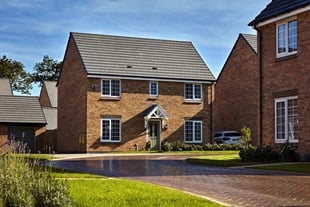


We are preparing a Reserved Matters application for a development of 80 homes on land off Brook Street, Soham.
This thoughtfully designed 80‑home development will deliver sustainable and high‑quality homes. Inspired by the local vernacular, the scheme combines contemporary detailing with modern construction standards and traditional materials to create homes that are attractive, efficient, and built for the future. A strong landscape framework, generous green spaces, and carefully planned pedestrian and cycle connections will help foster a genuine sense of community and encourage active, sustainable living.
The development will provide a balanced mix of homes, including 16 affordable houses, to support local need, and four custom and self‑build plots, offering residents the opportunity to shape their own homes.
It was important to us that we listen to the views of the local community in order to inform our plans. We held an online consultation to gather the views of the community, which will took place from Monday 16th March to Monday 30th March.
Our application will be submitted to East Cambridgeshire District Council in spring 2026.
Development Map
Masterplan
The proposed scheme will deliver a well‑structured and landscape‑led development, incorporating public open spaces, a new play area, and strong pedestrian connections to The Commons and existing walking routes. Carefully arranged streets, varied housing types and integrated green ecological corridors create a cohesive layout that enhances accessibility, supports active travel and provides an attractive, high‑quality environment for new residents.
Homes proposed
The proposed housing mix for the development has been carefully structured to create a diverse range of dwelling sizes and types to support mixed communities.
The scheme comprises an appealing mix of one to five‑bedroom homes, delivered as a varied range of maisonettes, houses and a bungalow. This mix ensures broad appeal to different household sizes and supports a sustainable community structure. In line with Local Plan Policy requirements, the development also includes four custom/self‑build plots, which will be marketed with details to be agreed with the Local Authority.
Sustainability sits at the heart of the scheme, with homes designed to be energy‑efficient and built to modern standards that reduce carbon impact. This approach not only supports long‑term environmental goals but also enhances the overall quality, resilience, and liveability of the new neighbourhood.
About our proposals features
Connectivity
By improving the condition and usability of the footpaths and introducing new connections, the scheme enhances access to green space, creates safer and more direct walking and cycling routes, and strengthens links between Brook Street, Greenhills and The Commons. This encourages regular use of the local landscape and improves overall permeability for the wider community, making the surrounding area easier and more enjoyable to navigate.
Drainage
A robust drainage strategy is essential to ensuring the new development manages surface water safely and sustainably. By incorporating SuDS features, controlling runoff rates, and designing networks that respond to climate change, the scheme will reduce flood risk on and off-site. This approach supports long‑term resilience, environmental protection, and compliant, well‑planned growth.
The site’s drainage will be managed in accordance with the approved strategy by raising ground levels, creating building platforms to meet Environment Agency requirements, and providing an attenuation basin and a network of swales, which, together with a pump station, will regulate surface water runoff across the development. A dedicated pump station will enable controlled discharge of foul water and provide a reliable connection to the existing mains drainage system.
Ecology
Ecology plays a vital role in shaping a responsible new development. By understanding existing habitats and species early, the scheme can avoid harm, introduce meaningful enhancements, and deliver long‑term environmental value. Biodiversity Net Gain ensures the project leaves nature in a measurably better state, securing at least a 10% uplift through habitat creation, restoration and sustained management.
The development will retain a substantial amount of existing vegetation, incorporating selective planting to strengthen and support Biodiversity Net Gain. Working with our arboriculture and ecology consultants, we have identified key trees, hedgerows and habitats that will be protected and enhanced throughout the scheme. The proposals include wildlife measures such as hedgehog highways, swift bricks and bird nesting boxes, alongside other habitat features that encourage species movement and ecological resilience.
These enhancements will provide meaningful support for local wildlife, helping to mitigate the impact of development while delivering long‑term biodiversity benefits.
Heritage
Heritage plays a vital role in shaping meaningful new development, grounding proposals in the character and history of their surroundings. By respecting traditional forms, materials and settlement patterns, as highlighted in the Soham Barway Neighbourhood Plan, new schemes can enhance local identity, reinforce a sense of place, and ensure growth complements the area’s historic environment.
Archaeological investigations have revealed traces of Soham’s past, including Bronze Age, Iron Age and Roman activity. Further archaeological work will take place before construction begins, ensuring any findings are properly recorded. This careful approach allows the development to move forward while respecting the area’s historic interest and preserving the story of the landscape for future generations.
The ancient burial mound identified at the outline stage has been carefully protected within the masterplan. Taylor Wimpey will sensitively fence off the area in agreement with archaeologists to ensure it remains undisturbed, while adding discreet interpretive signage so residents can appreciate its significance.
Our approach features
Previous use
Previous planning applications
The site has no previous planning history before the recent hybrid application 21/01048/HYBM, which sought permission for a replacement dwelling, new site access and up to 80 homes. Following detailed assessment and completion of a Section 106 Agreement, East Cambridgeshire District Council granted planning permission on 17 October 2024.
In August 2021, we submitted a hybrid planning application (21/01048/HYBM) seeking full permission for the demolition and relocation of 81 Brook Street and outline permission for up to 80 new homes, open space and supporting infrastructure.
The Council undertook a comprehensive review covering flood risk, ecology, heritage, landscape, transport and the site’s role within the wider Local Plan allocation. The Planning Committee Report confirmed no statutory objections, and officers concluded that the scheme would not prejudice the delivery of the remaining allocation. A Section 106 Agreement secured obligations for affordable housing, education, highways, biodiversity and contributions toward improvements to Soham Commons. The Council subsequently approved the application on 17 October 2024.
Previous consultations and feedback
Previous community engagement was undertaken by Pigeon Investments through a virtual public exhibition held between 9th and 25th June 2021, following the circulation of consultation invitations to around 600 nearby households. The website attracted 303 unique visitors and generated 28 feedback responses. Engagement also took place with Soham Town Council, including attendance at its Planning Committee meeting on 26th April 2021.
Taylor Wimpey has discussed its scheme with East Cambridgeshire Council through a formal pre-application process and presented initial development plans to Soham Town Council on Monday 26th January, 2026. The current scheme has evolved as a result of the feedback received from these early conversations with both the District Council and the Town Council.
History of the site features
Economic benefits
Open space
Open space is central to the scheme’s landscape‑led design, creating a high‑quality setting that enhances wellbeing, supports biodiversity and provides meaningful recreational opportunities. The linear park along the green corridor forms an attractive natural framework, softens the settlement edge, and ensures accessible, usable green spaces for both new and existing residents.
The open space has been designed around a connected network of footpaths that weave through the linear park and green spaces, strengthening links between Brook Street, Greenhills and The Commons. These routes incorporate the existing public footpath and introduce new paths that encourage walking, cycling and recreation throughout the landscape‑led setting. To the east of the scheme, a new play area is integrated within the main open space, providing an accessible and well‑overlooked play facility for families while forming a focal point within the wider pedestrian network.
Amenities and facilities
- Early Years Education contribution
- Secondary Education contribution
- Sixth Form Education contributions
- Highway Improvement contribution
- Library Contribution
- Community Infrastructure Levy contribution
- Widening the existing footway on the western side of Staples Lane between Brook Street and Fordham Road to a minimum of 2m width.
- 4 x self/custom build plots
- 16 affordable homes (20%)
Community benefits features
 Learn more
Why choose us?
We're one of the UK's largest homebuilders. Find out why to choose us for your new home.
Learn more
Why choose us?
We're one of the UK's largest homebuilders. Find out why to choose us for your new home.
 Ways to buy
Help with buying your new home
Explore the ways we can help get your home buying journey moving.
Ways to buy
Help with buying your new home
Explore the ways we can help get your home buying journey moving.
 Why choose us
Award winning homes
We're proud to have been awarded 5 stars for customer satisfaction by the Home Builders Federation.
Why choose us
Award winning homes
We're proud to have been awarded 5 stars for customer satisfaction by the Home Builders Federation.